

Poll Results Are Not Opinions. They Are Evidence.
A single poll is a snapshot. A pattern across responses is a verdict.
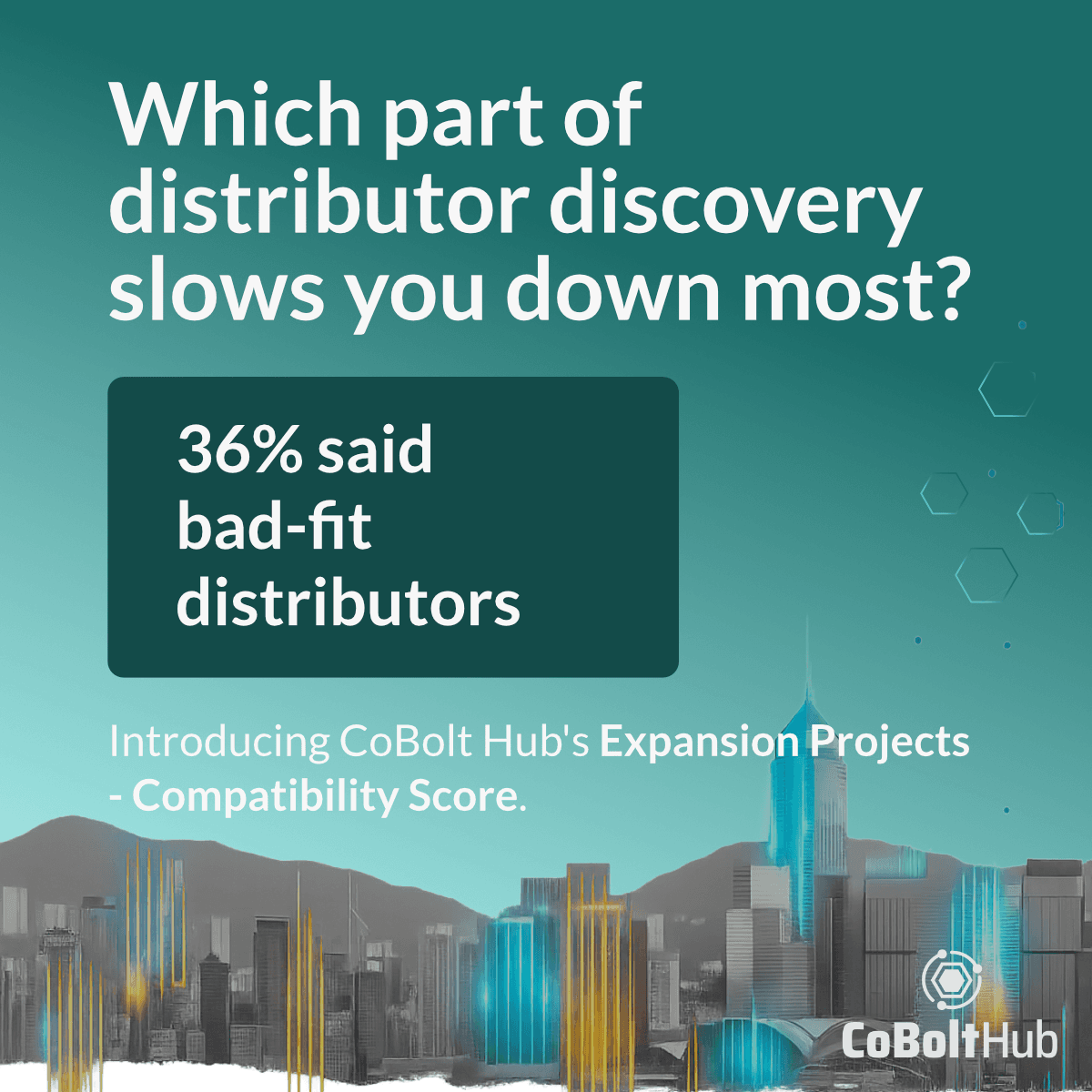
When CoBolt Hub asked channel and business development professionals where partner discovery actually breaks down, the results were not surprising. They were confirming. The same frustrations surfaced repeatedly: discovery takes too long, the available information is too shallow, and the signals that matter most, capability and intent, are the hardest to find before a conversation begins.
That is the core finding. It is also the reason CoBolt Hub exists.
This analysis unpacks the poll results, examines why the status quo persists despite near-universal dissatisfaction, and sets out what a structured discovery workflow changes for both sides of the channel.
The Pattern Behind the Poll Results
Poll data in the channel space tends to cluster around three consistent complaints.
First, discovery consumes more time than teams expect. Business development leaders describe weeks, sometimes months, spent identifying, contacting, and qualifying potential partners before any substantive evaluation begins. The early stage is where most of the effort is spent and where the least structure exists.
Second, the information available is thin. Directories list who exists. They rarely show who is capable, who is aligned, or who is actively looking. A partner that appears credible on a listing page can quietly fail every operational test once evaluation starts.
Third, intent is invisible. Most channel relationships begin without either side knowing whether the other is genuinely ready to invest. This is the gap that produces the most waste, because misalignment discovered late is far more expensive than misalignment discovered early.
These three complaints are not separate problems. They are symptoms of a single structural issue: partner discovery is treated as an administrative step rather than a decision-making process.
Why the Status Quo Survives Anyway
If the dissatisfaction is this consistent, why does the informal approach persist?
The answer is partly habit and partly the absence of a better option. Channel teams default to legacy networks, industry events, and consultant introductions because those are the tools that have always been available. The Forrester Partner Ecosystem Marketing Survey found that a majority of B2B partner ecosystem and channel decision-makers expect their partner ecosystems to expand, with the highest growth anticipated in technology, distribution, and digital routes to market.1
That expectation creates pressure. More partners, more markets, more complexity, and the same informal discovery methods that were already struggling at smaller scale. The status quo does not survive because it works. It survives because the alternative has been hard to define.
CoBolt Hub's view is that this is a solvable problem, and that solving it requires treating discovery as a continuous workflow rather than a set of isolated tasks.
Discovery Is the First Mile, Not the Last Step
Most partner technology focuses on what happens after a relationship begins: onboarding, enablement, deal registration, management. That is important work, but it starts too late.
By the time a partner reaches onboarding, the decision that matters most has already been made. If that decision was based on incomplete information, no amount of downstream management will fully correct it. Teams end up fixing partnerships that should never have been formed.
CoBolt Hub focuses on the first mile. The premise is straightforward: if teams can surface misalignment, capability gaps, and intent signals before committing resources, they avoid the downstream cost of correction. Discovery becomes the point where fit is established, not the point where assumptions are recorded.
The poll results point in exactly this direction. Respondents are not asking for better partner management tools. They are asking for better information earlier in the process.
What Structured Discovery Actually Changes
A structured discovery workflow replaces assumptions with evidence at each stage.
The first stage is a partner-ready profile. Companies capture capabilities, coverage, specialization, and intent in a consistent format. This matters because discovery that starts with clarity produces better shortlists than discovery that starts with guesswork.
The second stage is planning. Teams define market entry goals, partner requirements, and evaluation criteria before searching. This is where the poll's time complaint is addressed directly. Structure upfront reduces the endless qualification loop that consumes business development capacity.
The third stage is search and matching. Instead of relying on familiarity, teams discover aligned partners through filters, project criteria, intent signals, and platform recommendations. The distinction between a directory and a discovery platform is precisely this: a directory shows who exists, while a discovery platform shows who aligns.
The fourth stage is consent-based connection. Rather than cold outreach or blind introductions, both sides opt in with context. This is where intent becomes visible rather than assumed.
The fifth stage is structured evaluation. Teams assess capability against their own criteria, compare candidates, and track progress within a consistent framework. Decisions become defensible because the reasoning is documented and reviewable.
The sixth stage is monitoring. Dashboards surface partner intent, engagement, and workflow progress over time, so decisions stay informed as market conditions shift.
Each stage builds context for the next. Nothing is lost between steps, and nothing has to be restarted when priorities change.
What This Means for Principals and VADs
Discovery is a two-sided problem, and the poll results reflect that.
For software companies, referred to as principals in the channel, the cost of weak discovery is measured in wasted business development cycles. Months spent evaluating partners who were never positioned to convert. Structured discovery prioritizes alignment upfront, so investment flows toward partners who are active, capable, and ready to engage.
For Value-Added Distributors, referred to as VADs, the cost is visibility. A distributor with genuine technical depth and regional presence can still be overlooked if its capabilities are scattered across incomplete listings. A structured profile turns certifications, vertical wins, and service strengths into comparable signals that principals can actually evaluate.
Both sides benefit from the same underlying shift: from existence to alignment. The poll results confirm that this shift is overdue, not speculative.
A Credible Limitation
CoBolt Hub does not replace a CRM or a partner portal, and it does not manage relationships after they begin. Its scope is deliberate. It supports the early stages of partner development: defining requirements, discovering candidates, assessing alignment, and evaluating fit before contracts or onboarding start.
Once a partnership progresses, teams continue managing it in their existing systems. CoBolt Hub is designed to improve the quality of the decision that precedes that management, not to duplicate it.
What the Poll Results Imply for the Year Ahead
Poll results are only useful if they change behaviour. The pattern here is clear enough to act on.
Channel teams overwhelmingly recognise that discovery is slow, information is shallow, and intent is invisible. They continue to rely on informal methods because those methods are familiar, not because they are effective. Meanwhile, ecosystems are expected to expand across every partner type, increasing the volume of decisions that informal discovery must support.
The practical implication is straightforward. Teams that formalise discovery will make faster, more defensible decisions and waste less business development spend. Teams that do not will keep fixing partnerships downstream, assuming the problems are fixable at all.
Discovery is where fit is either established or assumed. The poll results suggest most teams are still assuming. The better path is to know. CoBolt Hub - CoBolt Hub is a structured partner discovery platform for software principals and Value-Added Distributors, built around capability, coverage, and intent signals.
Sources
Footnotes
-
Forrester: The State Of Partner Ecosystems In 2025 - Forrester's Partner Ecosystem Marketing Survey found that a majority of B2B partner ecosystem and channel marketing decision-makers expect expansion in the number of partners within their ecosystems, with the highest growth anticipated across technology partners, distribution partners, and digital routes to market. ↩