

Expansion projects have a way of looking brilliant on a slide and falling apart in the field. The market is new. The buyers are unfamiliar. And somewhere between the board-approved roadmap and the first signed partner, the whole thing quietly stalls.
Here is the uncomfortable part: most expansion projects do not fail because the product is weak or the market is wrong. They fail because the partner discovery that should power them never really starts. Teams pick distributors from directories, chase referrals, and hope for the best. Then they spend months trying to fix a partnership that was never built to work.
Forrester's State of Partner Ecosystems 2025 research found that around two-thirds of B2B leaders now attribute meaningful growth to partner-influenced or co-sold deals.1 Expansion through partners is no longer optional. It is the primary engine. And yet most companies still run that engine on assumptions.
Your Expansion Project Deserves a Plan, Not a Prayer
Software companies, referred to as principals in the channel, and Value-Added Distributors (VADs) both run expansion projects with the same broken toolkit. Principals need VADs who can sell and support a product in a new region. VADs need principals whose roadmap actually fits their market. Both sides end up scrolling directories, comparing wildly different profiles, and hoping a spreadsheet captures the difference.
It does not.
An expansion project needs structure before it needs contacts. That means defining what a good partner looks like before you go looking. Which regions matter? Which industries? Which capabilities are non-negotiable? Which intent signals tell you a partner is genuinely ready to invest?
CoBolt Hub Turns Expansion Into a Workflow
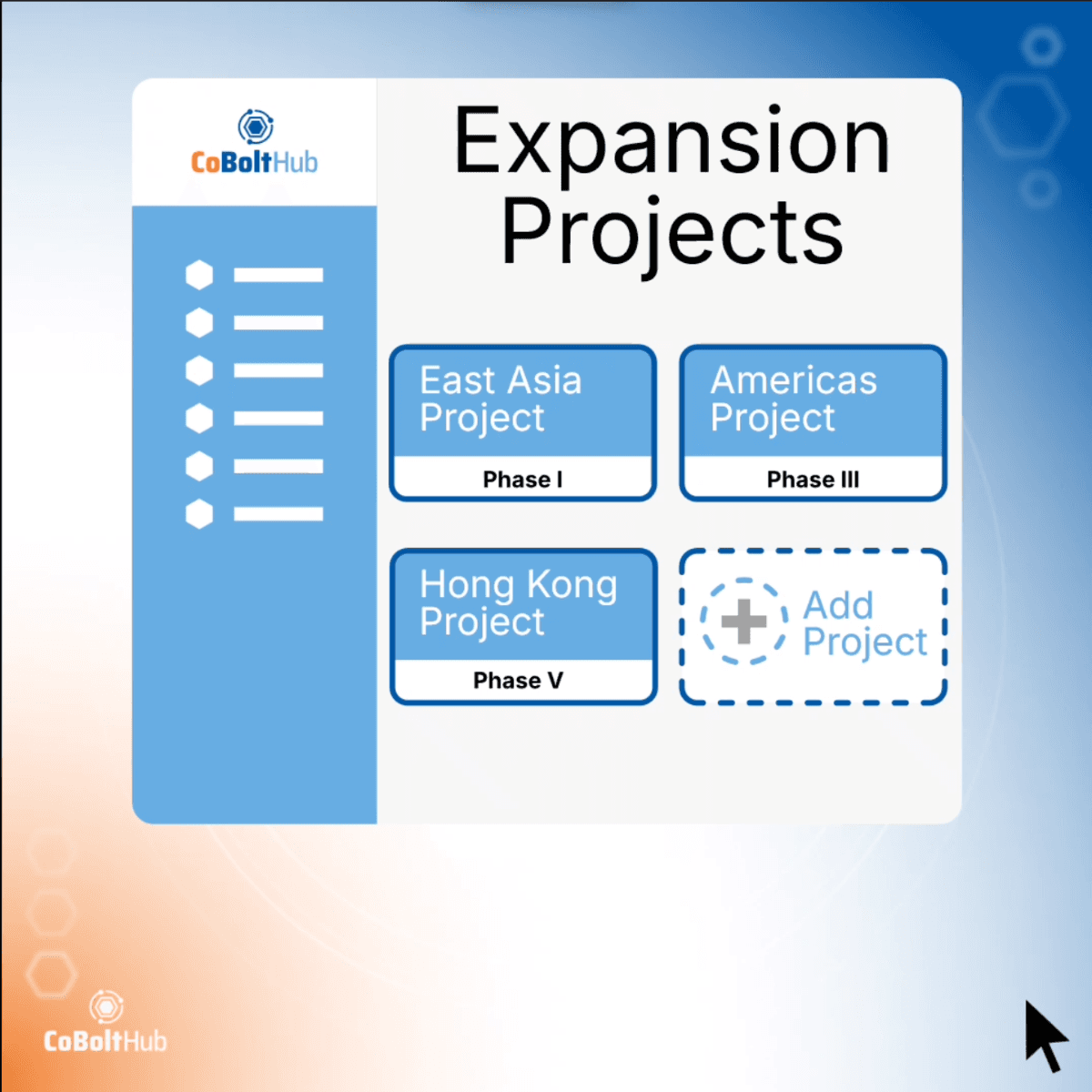
CoBolt Hub was built for exactly this moment. The platform treats an expansion project as a continuous workflow, not a scramble. You start by defining your market entry goals and partner requirements. Then you search with filters, project criteria, and real intent signals. Every candidate is compared against the same standard, so shortlists stop being vibes and start being decisions.
That is the shift. Instead of asking "who exists in this market," you ask "who is capable, aligned, and ready to engage." CoBolt Hub surfaces the partners who signal genuine interest in your industry, your coverage, and your model. The ones who are serious rise to the top. The ones who merely list themselves everywhere quietly sink.
For principals, that means fewer wasted business development cycles and a defensible shortlist you can take to leadership with confidence. For VADs, it means your certifications, vertical wins, and service strengths finally show up as comparable signals that principals cannot overlook. Both sides are choosing with evidence instead of optimism.
Test the Market Before You Commit the Budget
Here is where CoBolt Hub changes the economics of expansion. You can test the viability of a new market before you invest real time or money in it. See which distributors are already active in a region, what categories they support, and whether their existing vendors align with your product. That early read on capability, coverage, and intent lets you make a confident go/no-go call instead of committing resources to a market that was never going to work.
Some expansion projects should not happen. CoBolt Hub helps you figure that out early, cheaply, and with your reputation intact.
The Honest Fine Print
CoBolt Hub cannot rescue a weak proposition or manufacture demand where none exists. If your product does not fit the market, no discovery platform will save the rollout. What CoBolt Hub does is make sure you never lose an expansion project to bad partner selection, unclear requirements, or a shortlist built on guesswork.
That is where most projects actually die. Fix that, and expansion stops being a gamble.
Start your next expansion project with structure. Build your partner criteria, discover who is ready, and make the right call with confidence. CoBolt Hub - CoBolt Hub is a structured partner discovery platform for software principals and Value-Added Distributors, built around capability, coverage, and intent signals.
Sources
Footnotes
-
Forrester: The State of B2B Partner Ecosystems, 2025 - Forrester research cited for the finding that roughly two-thirds of B2B leaders attribute meaningful growth to partner-influenced or co-sold deals, underscoring why partner-led expansion is now the primary growth engine. ↩